
Shared Environments, Shared Futures – September 2025 report 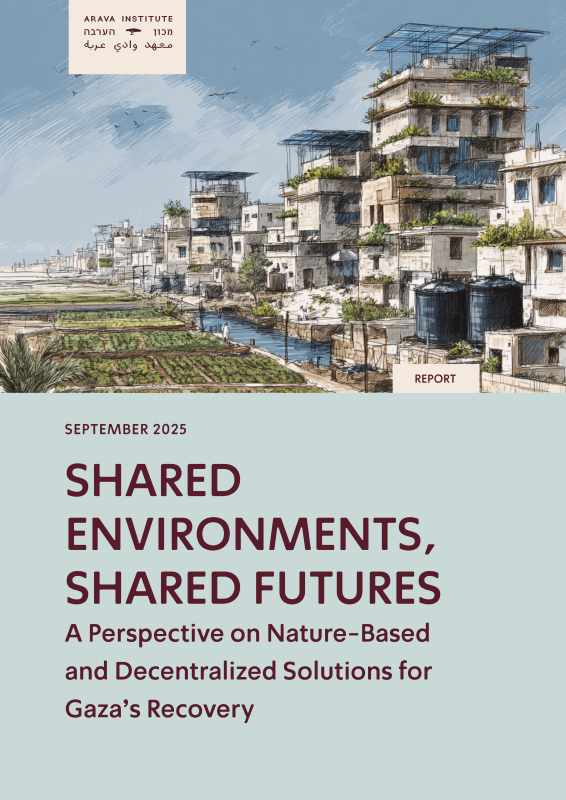 Executive summary
This report provides an update to our 2024 analysis of the environmental and humanitarian impact of the current Israel-Hamas war, which focuses on the effects in Gaza and the broader implications for the region in six key areas – energy, water, environmental hazards, health, food security, and environmental degradation. We have added to this report important information on issues of human displacement and a roadmap for a phased, sustainable recovery approach.
Due to the current Israel – Hamas war, Gaza faces an unprecedented humanitarian and environmental catastrophe, marked by widespread destruction, ongoing displacement, and a severe strain on fragile ecosystems. The existing aid distribution system is currently unfit, failing to deliver assistance consistently and safely to a population enduring alarming overcrowding and critical health challenges amidst environmental degradation. The cyclical nature of conflict and inadequate traditional reconstruction efforts has deepened these vulnerabilities, highlighting a critical nexus between environmental health, public health, and lasting peace. A hopeful future for Gaza hinges on addressing the root causes of environmental degradation and health crises, fostering Palestinian ownership, ensuring transparent funding, and implementing third-party oversight to guarantee accountability and long-term stability.
Since the spring of 2024, Damour for Community Development and the Arava Institute have tried to address some of these inadequacies through its own environmental, WASH and energy efforts under Jumpstarting Hope in Gaza (JHG). While responding to the immediate crisis with food, water, hygiene kits, and basic shelter infrastructure, JHG has created a model for a transformative recovery based on experience working in off-grid communities with decentralized technologies. Recognizing that the interim period between the end of the current fighting and full sustainable recovery in Gaza will be many years, Damour and the Arava Institute offer an alternative strategy for meeting the needs of displaced persons in Gaza by establishing sustainable self-managed communities empowered by decentralized technologies and motivated by the desire to build a peaceful future in the region.
This report advocates for a paradigm shift from conventional reconstruction to a transformative recovery rooted in nature-based and decentralized solutions. It emphasizes that sustainable recovery in Gaza requires immediate, adaptive, and long-term strategic interventions that empower local communities, prioritize ecological restoration, and establish robust governance mechanisms.