As the ongoing tragedy of the Middle East continues to unfold, we at the Arava Institute remain committed to dialogue and cross-border partnerships in order to resolve differences through non-violent means and work together for a more sustainable and peaceful future. As you can see from this month’s blog, our commitment is not just on paper. In the midst of the current crises, our Center for Trans-boundary Water Management convened 40 Israeli and Palestinian water experts and policy makers for a workshop on cross-border waste water cooperation in Beit Jalla, West Bank Palestine. In a response to my recent message expressing our grief and sorrow over the loss of life in the region, Suleiman Halasah, an Arava Institute alum and colleague wrote to me: “I hope the sound of sanity will be heard in our region and people will understand that these actions don’t lead to any better future”. Amen
David Lehrer
CTWM trip to the West Bank with American University
On June 9th and 10th, the Arava Institute’s Center for Trans-boundary Water Management (CTWM) team hosted a study tour for a Graduate Practicum on Water, Cooperation, and Peace in the Middle East from American University’s School for International Service, led by professors Eric Arbitol and Ken Conka.
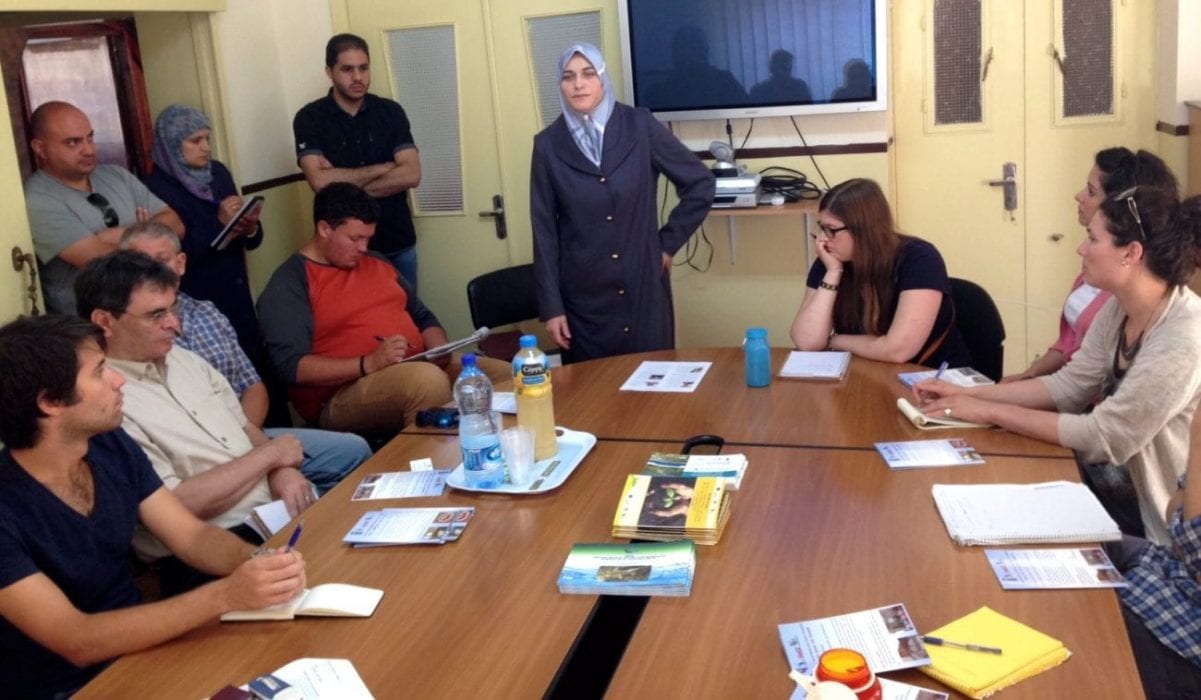 Together, both teams traveled to Palestinian homes in the West Bank to monitor four pilot greywater systems that CTWM, together with its Palestinian partner, the House of Water and the Environment, have installed through a USAID-funded project over the past year. At each visit, CTWM collected samples of greywater for testing and spoke to families about properly maintaining these systems. Additionally American University students had the opportunity to meet with and speak to families and local experts about their experience with the project. The students also visited a new wastewater treatment plant outside Nablus, with the aim of understanding perspectives on centralized versus de-centralized wastewater treatment in the region.
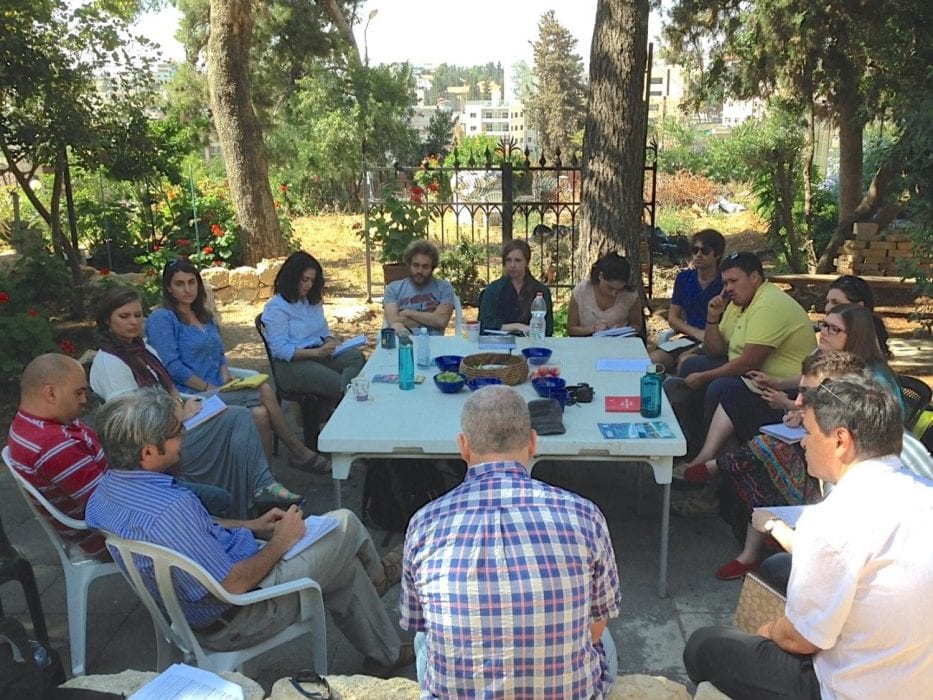
The trip was mutually beneficial as the team gained insights into how their work can be perceived, and the AU students began to appreciate the complexity of the situation on the ground.
Submitted by Jen Holzer
Final Days of the Spring 2014 Semester
After two weeks of final exams and in the midst of the cleaning and packing up of the last of the semester, the students and interns took time to reflect on their experience, brainstorm for their future academic plans, and celebrate their community. There was a pirate-themed final party on June 17th, for which all lent a hand in the preparations, bringing homemade food and decorations. The night began with awards prepared for everyone by the Program Associates, Aviva Gottesman and Asem Magableh, then continued with a slideshow of photos from the semester, and ended with dancing through the night.
There was a ceremony with the Academic team on June 18th, the last full day together. The students and Teaching Assistant interns ran an exercise recalling exam questions from each course. Then, in small groups, they imagined plans for new academic programs they would like to see at the Arava Institute — such as Green Business, Humanities, Green Design, and Religion. To finish, students were presented with certificates for their completion of the semester.
The final night was marked with a Peace-building and Environmental Leadership Seminar (PELS) ceremony. Under the supervision of two students, the group went on a ‘trust walk’ out to a campfire site behind the kibbutz. With only one student’s eyes open in front of a single-file line, the rest followed blindly, a testament to the high levels of trust and patience within the community. Once there, Michelle Shachar, the PELS coordinator, distributed paper and instructions to find a secluded place to sit and write a letter to themselves about the learning and challenges of the semester. She plans to send the letters to everyone in one year. Regrouping around a bonfire after the self-reflection, each member of the community shared a struggle they faced this semester and something positive they hope to take home with them. Many sentiments of the initial difficulty of finding one’s place in such a diverse community and across the handful of language barriers were shared as well as many desires to keep opening to new ideas and learning.
Submitted by Mimi Kaplan
House of Lords visit
On Monday, June 9th, Lord Leslie Turnberg hosted David Lehrer and Raja Aziz at the House of Lords of the UK Parliament in London, in order to raise awareness of the peace-building work being done by Israelis, Palestinians, Jordanians and international students. Raja Aziz studied at the Arava Institute from 2010-2011 and is currently studying for her Masters at Ben-Gurion University. They spoke to a group of about 10 individuals and explained how the Arava Institute has been using the environment as the common ground for cooperation in the Middle East.
Raja told her story of having suffered through the second intifada by having to cross Israeli checkpoints every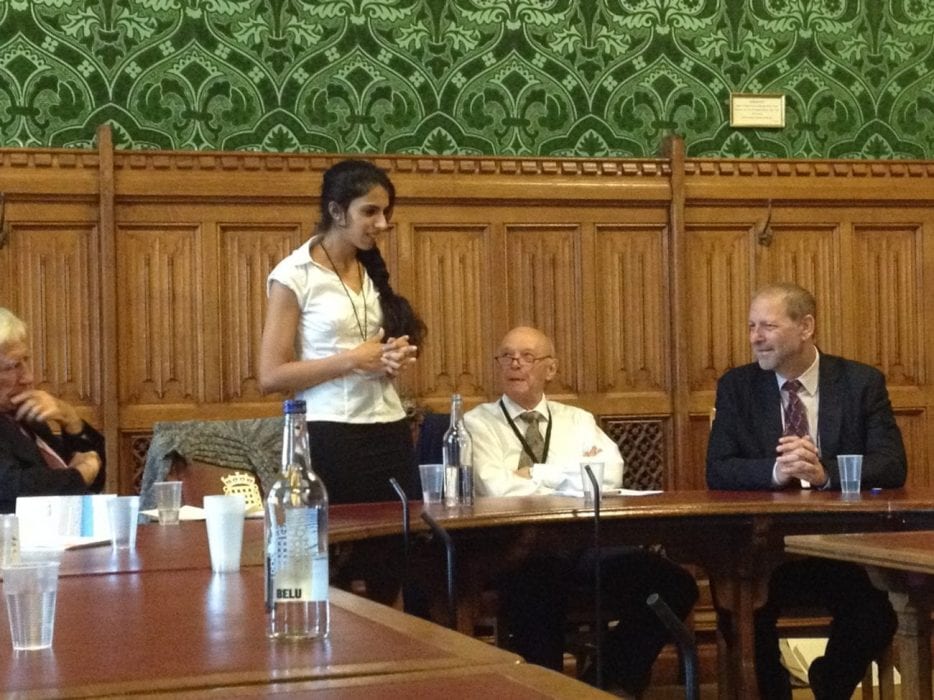 day from East Jerusalem into the West Bank where she was studying for her first degree at Ber Zeit University. This influenced her decision that for her second degree, she wanted to study in Israel in order to understand the “other’s” narrative – a decision that was not easy for her family to accept. Because Raja’s education until this point had been segregated from Israel, Raja found herself studying with Jewish Israelis for the first time in her life. She attended a student trip to Jerusalem that brought her to Yad Vashem for the first time and taught her about the Jewish tragedy, while Jewish students heard for the first time from a Palestinian refugee whose village had been cleared in 1948. “It is not about comparing tragedies or placing blame but acknowledging each other’s pain. If you can acknowledge pain, the air is cleared for cooperation” says Raja.
David then spoke about the creation of Peace-building and Environmental Leadership Seminar after discovering “that students could live together for a semester or a year, keep smiling at each other and not say what they really think. We knew we had to be proactive so we created a once a week seminar where students talked about what they don’t want to talk about; war, politics, religion, occupation, terrorism etc… What they learn is that we don’t have to agree but we do have to find a way to get along.”
Submitted by David Lehrer
Cooperation in Science and Technology training in Florence
On June 16, the Arava Institute staff member Marjorie (Gigi) Strom lectured at a school training at the Cooperation in Science and Technology (COST) entitled “Water Footprint Application for Water Resources Management in Agriculture” in Florence, Italy. COST is a European Union program through which multidisciplinary groups of European researchers meet to exchange ideas and educate young researchers. Members of the same group attended a workshop at Arava Institute in January. Thirty young researchers from throughout Europe attended the June training session, where lecturers included Prof. Tony Allan of Kings College, London, who coined the phrase “virtual 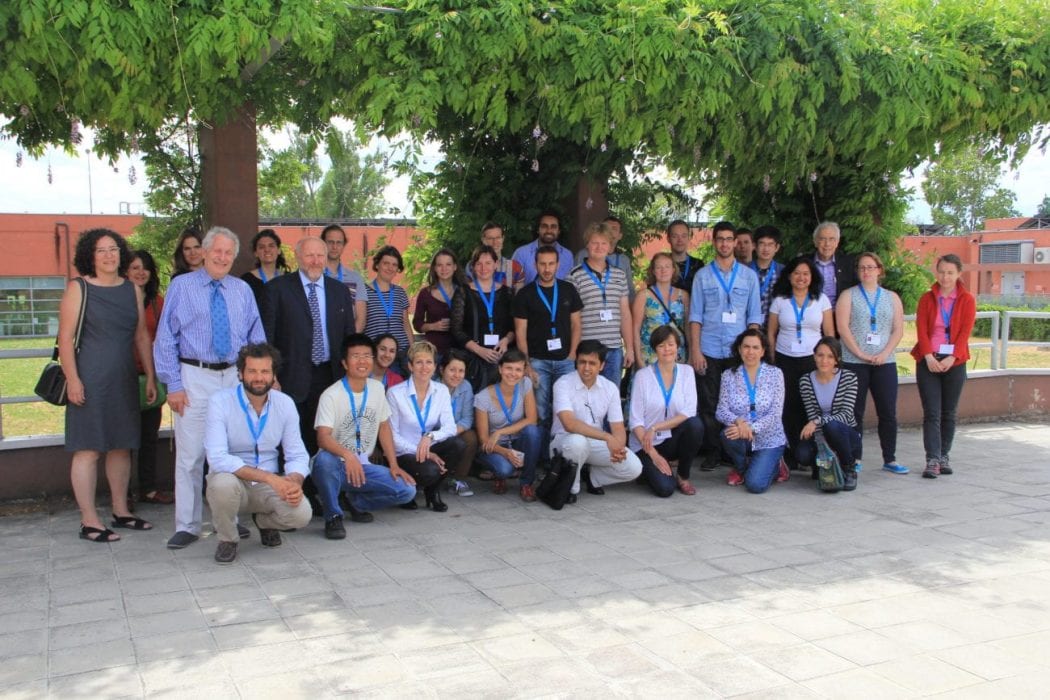 water” and Prof. Jim Salinger of the University of Auckland, New Zealand, a lead author for the Nobel-prize-winning team of researchers for the Intergovernmental Panel on Climate Change.
Gigi’s lecture focused on the need to combine water, land, and carbon footprints into one measure in order to adequately assess the value to society of different types of land and water for different uses. She also discussed the steps taken by Israel in the past 20 years to increase water availability through wastewater recycling and desalination and to reduce consumption through efficient irrigation, and the lessons that can be learned by an increasingly dry southern Europe. The lecture was well received by both the students and the other lecturers.
Submitted by Gigi Strom
UN Panel: “Every Drop of Water Makes a Difference”
On June 19th at United Nations Headquarters in New York City, the UN Department of Public Information and NGO Relations hosted a panel, “Every Drop of Water Makes a Difference,” moderated by Joseph Hess, Vice President of the Jewish National Fund. Dr. Clive Lipchin, Director of the Arava Institute’s Center for Trans-boundary 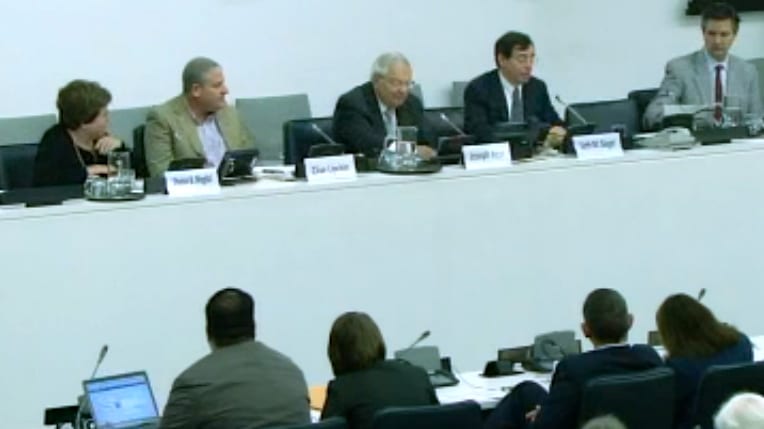 Water Management, spoke on the panel along with Dr. Sharon Megdal, Director of the Water Resources Research Center at the University of Arizona, and writer/businessman Seth Siegel.
Dr. Lipchin introduced the issues of chronic water scarcity facing the Middle East. He discussed Israel’s innovative approaches to meeting the challenges of supply and demand through desalination, wastewater treatment and reuse, and nationalized grids for both wastewater and potable water. He then discussed the role of the Arava Institute in addressing trans-boundary issues with Palestinians and Jordanians, and suggested the Red Sea Dead Sea or Mediterranean Sea Dead Sea Conveyance project as a possible solution for the shrinking Dead Sea and providing more water to the region. These large infrastructure projects require cooperation from all parties and at the highest level.
During the question and answer session, Dr. Lipchin explained the attraction to desalination as a way of decoupling from the hydrological system which is affected by climate change, but pointed out the energy concerns related to large-scale desalination. He also mentioned the potential for greywater to cultivate green spaces in urban settings like New York, where much of the audience resided. He further brought his trans-boundary perspective to the panel, providing the example of how Palestinians’ and Jordanians’ limited access to water gives them a high appreciation for the resource, as opposed to those who are privileged enough to have constant access to it without giving much thought to its economic value. Dr. Lipchin’s on-the-ground experience in the region proved to be an essential contribution to the panel.
A video of the presentation is available to watch here.
Submitted by Melanie Nakashian
CTWM-USAID workshop in Beit Jala
On June 26th, the Center for Trans-boundary Water Management (CTWM) hosted a workshop on Palestinian-Israeli cross border wastewater in Beit Jala, Palestine. The workshop was sponsored by USAID’s Middle East Regional Cooperation (MERC) program, which supports cross-border scientific research, and USAID’s Conflict Management and Mitigation (CMM) program, which promotes dialogue in conflict zones. Participants represented a variety of stakeholders from Palestine and Israel working in the field of trans-boundary wastewater issues.
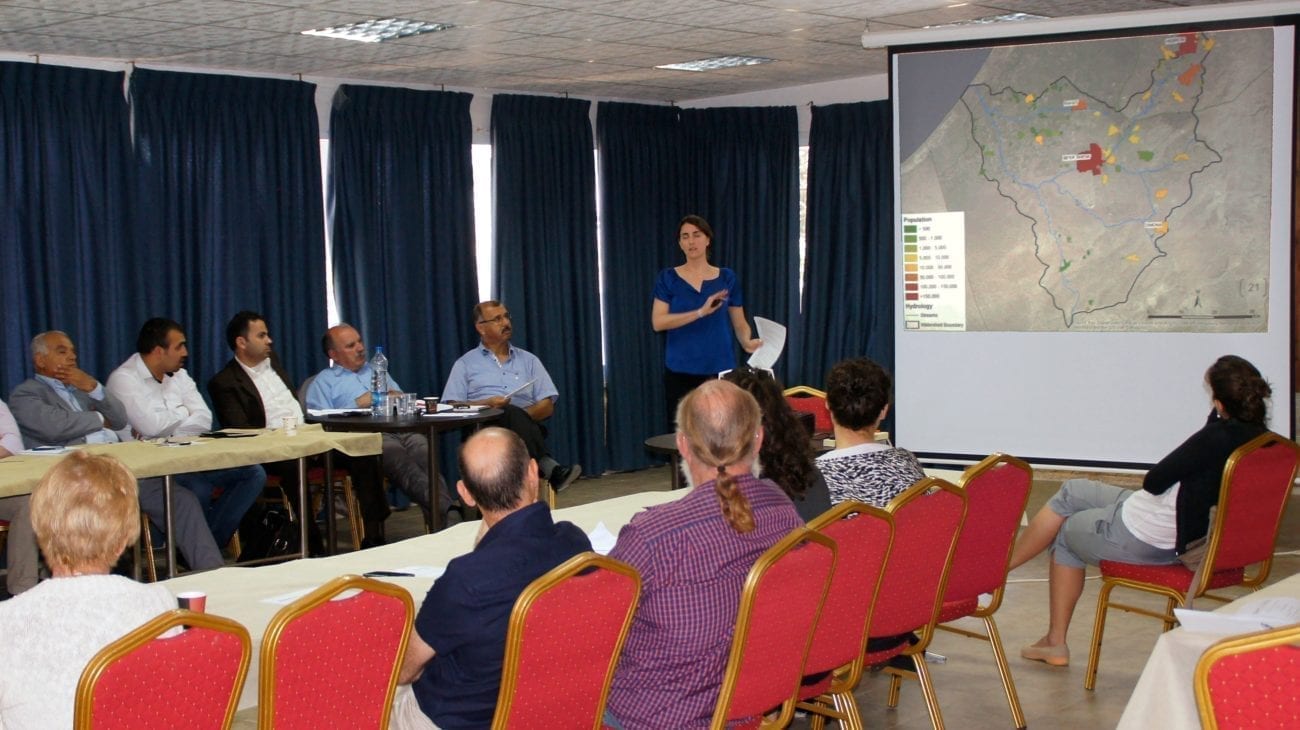 During the morning session, scientists from Ben Gurion University (BGU) and the Arava Institute as well as a Palestinian researcher from Friends of the Middle East (FoEME) presented their work. Tamee Albrecht (AIES-CTWM) presented results of her hydrological and socio-economic Geographic Information System (GIS) analysis of the Hebron/Besor transboundary watershed. Following that, CTWM Director Dr. Clive Lipchin presented a study of cross border water quality monitoring of surface and groundwater in this watershed. FoEME researcher Malek Abualfaila discussed water pollution originating from stonecutting and tannery industries around the upstream city of Hebron, and advocated further collaboration regarding these issues. The BGU research group working with Dr. Shai Arnon-Ben gave several presentations on occurrences and treatment of potentially hazardous endocrine disrupting compounds (EDCs) in the different aquatic environments throughout Israel and Palestine.
The afternoon session featured presentations on wastewater treatment standards and a discussion of potential cooperation in capacity building for wastewater treatment for use in agriculture, by Dr. Yossi 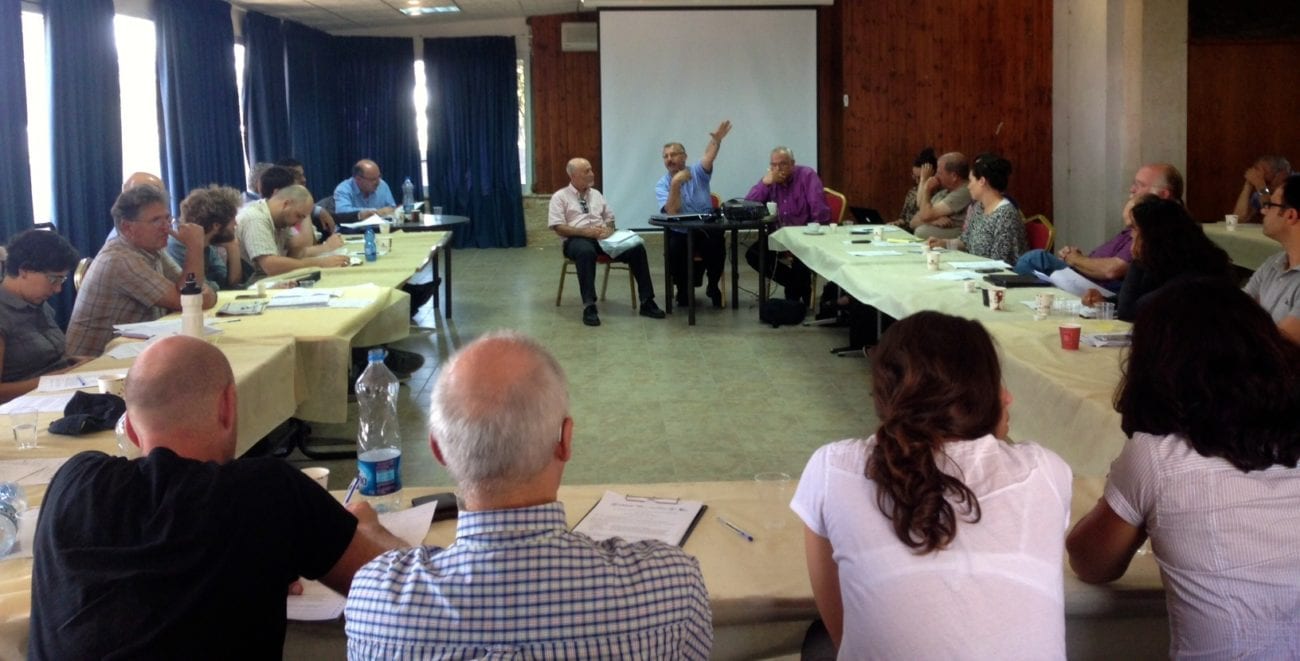 Inbar, Hebrew University, and Mr. Mohammad Said Al Hmaidi, Oslo accords negotiator and former adviser to the Palestinian Environmental Authority. The presentations led to a subsequent discussion about efficient wastewater reuse and the question of equal treatment standards for both Palestine and Israel. Professor Alon Tal (BGU) and Mr. Nader Al-Khateeb (WEDO, Water and Environmental Development Organization & FoEME) acted as facilitators. The participants discussed and pointed out the difficulties due to present differences in economy and treatment capacities between the two entities.
The workshop provided a forum for stakeholders to meet, exchange knowledge and views as well as to discuss potential future projects and cooperation. Participants were impressed by the data presented and showed great interest in continuing with the collaboration.
Submitted by Jan Bondy
‘The Arava Heights’ Conference
On Sunday, June 29th, the Arava Institute and partners organized a regional conference, under the headline: “’The Arava Heights- More Hidden Than Known.” The first part of the two-part conference included lectures about several natural aspects (geology, archaeology, ecology and bird-watching) and human aspects (history, archaeology, development and future planning) of the area 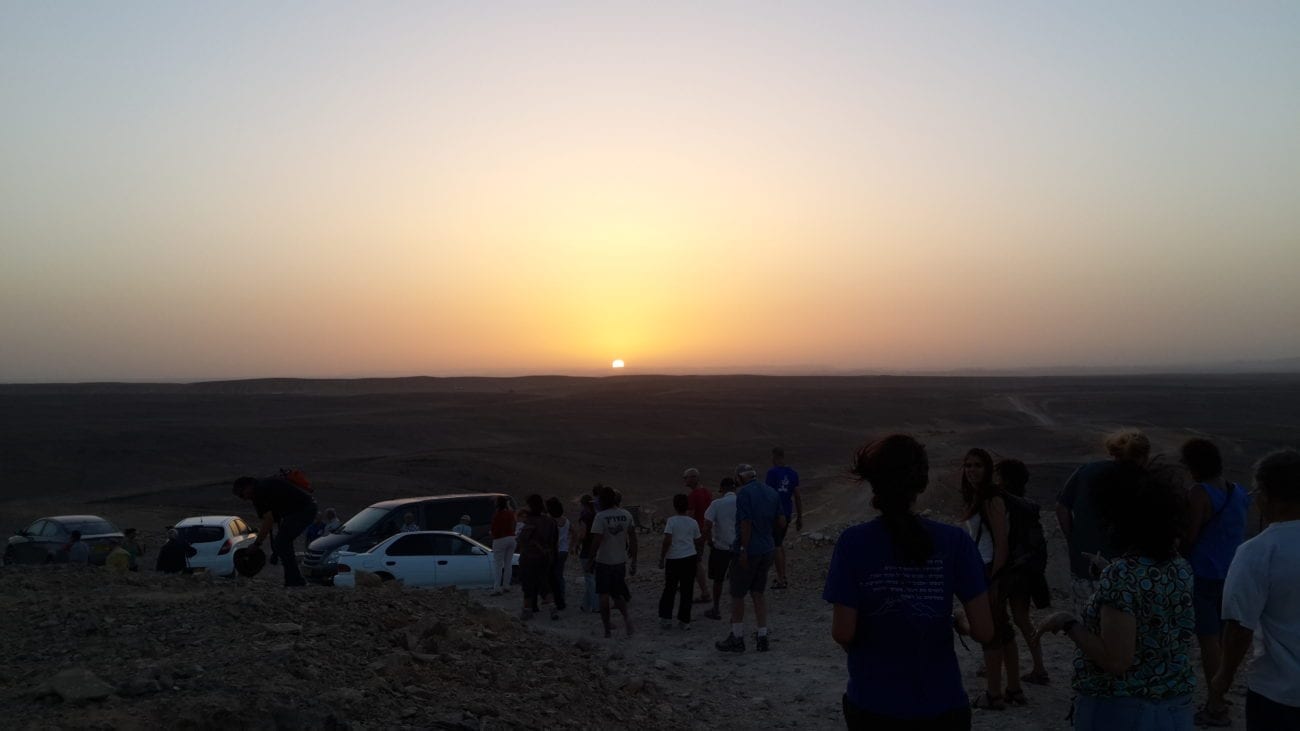 of the back of the Arava. The second part of the day included a tour to Arandal farm, and on the board line in the late afternoon.
The lectures were given from Uzi Avner and Hanan Ginat from the Dead Sea and Arava Science Center, Yoav Perlman from the Society for the Protection of Nature (SPNI), Udi Gat, head of the Regional Council, and Roei Talbi from Israel Nature and Parks Authority (INPA). The conference was produced by Hagar Ben Shlomo, an intern at the Arava Institute.
85 people attended, coming from all over the Eilat and Central Arava regions. During the conference, people of all ages expressed their interest in the talks and in the tour. Due to the success at this conference and at the previous Yovata Salt Flat Conference in January, partners decided to plan 4 conferences per year to address several topics of concern to the Dead Sea & Arava Science Center, the Arava Institute, and INPA.
Submitted by Hanan Ginat